The Hidden Cost of Visibility in Modern Commerce
For over a decade, commission-based marketplaces have positioned themselves as growth engines for small and medium-sized businesses.
“List your products.”
“Access millions of buyers.”
“Scale instantly.”
On the surface, it sounds like opportunity.
But beneath the promise of exposure lies a structural issue that many American businesses are beginning to recognize:
Growth built on commission dependency is not sustainable growth.
The problem isn’t individual platforms.
It’s the model itself.
The Illusion of “Free” Exposure
Commission marketplaces often promote low barriers to entry:
No upfront costs.
No marketing budget required.
Just pay when you make a sale.
But that framing overlooks something critical:
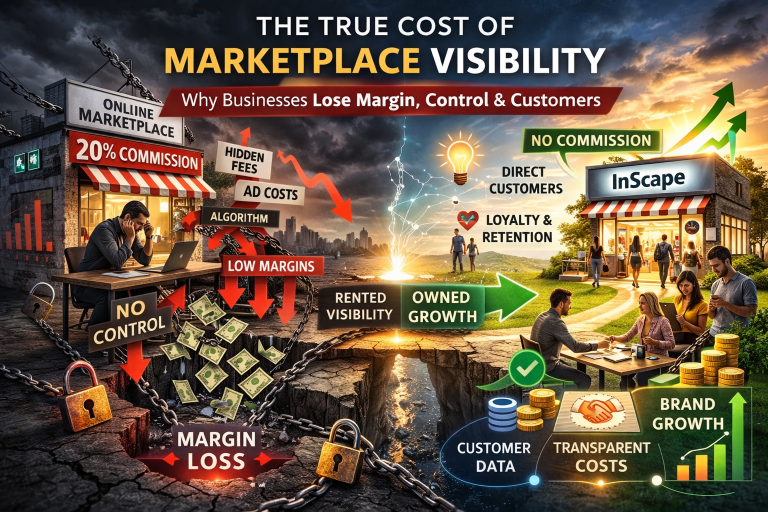
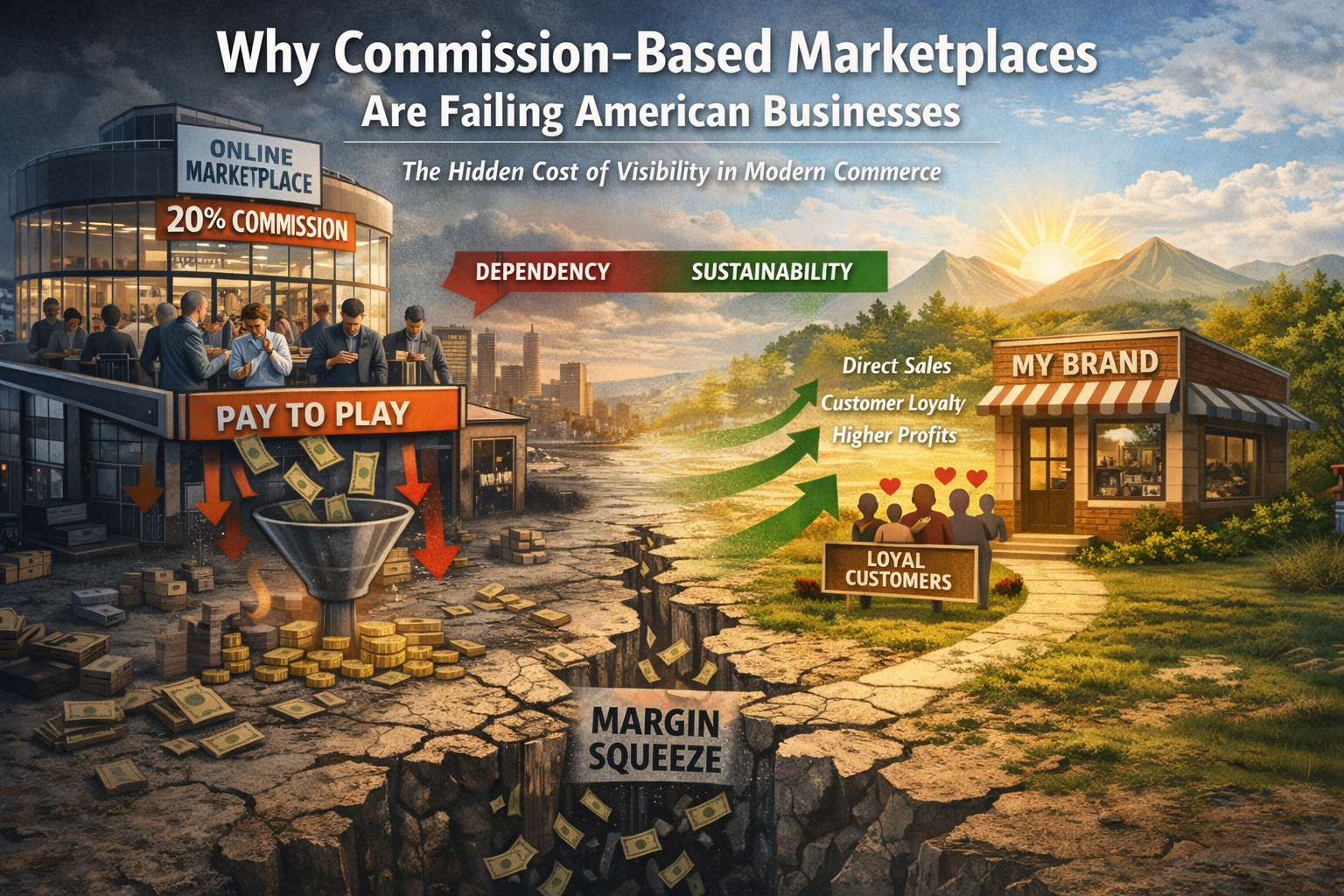
When a platform takes 10–30% of every transaction, that is not “performance-based.”
That is structural margin extraction.
For businesses operating in categories like:
-
Automotive
-
Tactical Gear & Equipment
-
Marine
-
Sport & Fitness
-
Retail
-
Tools & Hardware
-
Apparel & Fashion
-
Electronics & Appliances
-
Vitamins & Supplements
Margins are already tight.
When 20% disappears before fulfillment, marketing, shipping, and overhead are accounted for, the impact compounds quickly.
A business might increase sales volume — yet reduce profitability.
That isn’t scale.
That’s dependency.
The Margin Compression Effect
Let’s break it down simply.
If a product retails at $200 and the platform takes 20%:
$40 goes to the marketplace.
Payment processing takes additional fees.
Shipping and handling reduce margin further.
Marketing often requires additional spend to compete within the platform.
Suddenly, a “high-performing” product may generate revenue — but not meaningful profit.
This creates what we call margin compression:
Businesses increase sales.
Platforms increase earnings.
Brands shoulder the operational risk.
Over time, companies respond in predictable ways:
-
Raising prices
-
Cutting product quality
-
Reducing customer service investment
-
Scaling back innovation
The consumer ultimately feels it too.
Pay-to-Play Visibility
Another structural issue is internal competition.
Within commission marketplaces:
Brands compete for placement.
Advertising within the platform becomes necessary.
Sponsored listings dominate visibility.
Organic discovery becomes limited.
This shifts the model from commission-based to hybrid commission + advertising dependency.
Now businesses aren’t just paying on the backend —
they’re paying upfront for visibility inside a system that already extracts margin.
The result?
Exposure becomes rented, not earned.
And when a business stops paying, visibility often disappears.
Loss of Customer Ownership
Perhaps the most overlooked issue is customer relationship control.
In many marketplace structures:
Customer data is limited.
Retargeting opportunities are restricted.
Direct communication is controlled by the platform.
This prevents businesses from building long-term loyalty.
Instead of building brand equity, they build platform equity.
Instead of developing repeat customers, they generate one-off transactions.
That weakens long-term sustainability.
Especially in categories like:
-
Hunting
-
Outdoor
-
Travel
-
Food & Beverage
-
Personal Care
-
Tactical
-
Pets
Where community and loyalty matter deeply.
The Volume Trap
There is a psychological trap embedded in commission models:
More sales equals more success.
But revenue is not the same as strength.
A brand generating $1 million in marketplace revenue at compressed margins may be weaker than a brand generating $500,000 with direct customer relationships and higher retention.
True business strength comes from:
-
Margin control
-
Customer ownership
-
Loyalty
-
Pricing power
-
Brand trust
Not just gross transaction volume.
The Shift Toward Loyalty-Based Ecosystems
Across the United States, a shift is happening.
Brands are prioritizing:
-
Direct-to-consumer relationships
-
Community-driven growth
-
Loyalty programs
-
Transparent partnerships
-
Predictable cost structures
Instead of giving away 20–30% per sale, many businesses are asking:
What if exposure didn’t require surrendering margin?
What if visibility and growth could exist without structural commission extraction?
This question is reshaping how modern marketplaces are built.
A Different Approach to Marketplace Growth
The future of marketplace commerce may not be about transaction-based commissions at all.
It may be about:
-
Subscription-based participation
-
Loyalty ecosystems
-
Direct offer control
-
Flexible promotional models
-
Transparent economics
In this model:
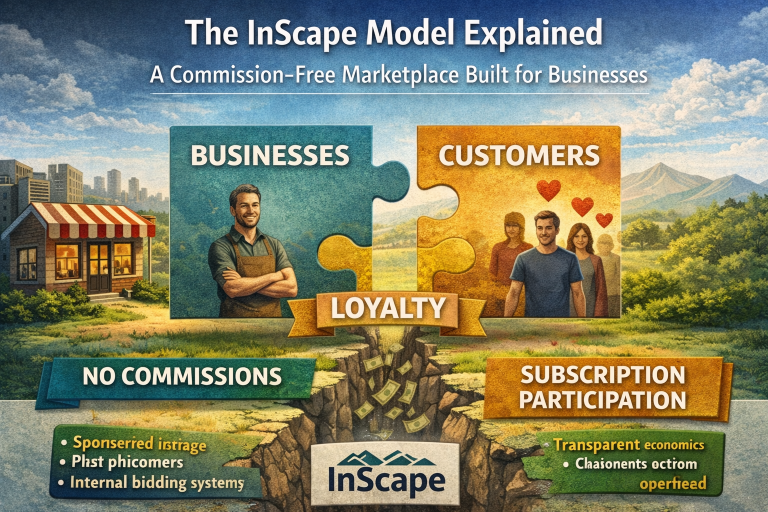
Businesses keep their sales revenue.
Platforms focus on connection, not extraction.
Customers benefit from curated access and rewards.
Growth becomes aligned, not adversarial.
This is not theory.
It’s a structural correction.
Why This Matters for American Businesses
Small and medium-sized businesses are the backbone of the American economy.
They drive innovation in:
-
Automotive performance
-
Tactical and outdoor industries
-
Fitness and supplements
-
Tools and hardware
-
Apparel and specialty retail
-
Marine lifestyle
-
Software and digital services
But innovation cannot thrive in ecosystems where margin is continuously siphoned away.
Sustainable growth requires:
-
Fair economics
-
Transparent models
-
Long-term thinking
-
Loyalty over dependency
When businesses retain control of their margins, they reinvest in:
-
Better products
-
Better customer experiences
-
Better service
-
Stronger communities
That benefits everyone.
The Future of Commerce Is Alignment
Commission-based marketplaces are not inherently malicious.
They were built for a specific era of digital commerce.
But markets evolve.
As businesses mature and digital literacy increases, brands are seeking models that align incentives rather than divide them.
The next generation of marketplaces will likely prioritize:
-
Partnership over extraction
-
Loyalty over transaction
-
Margin preservation over volume inflation
-
Community over algorithmic competition
And that shift is already underway.
A Question Worth Asking
If your business stopped giving away a percentage of every sale tomorrow:
What would you reinvest in?
How would your pricing change?
How would your growth strategy evolve?
For many brands, the answer is clear.
The model matters.
And the structure behind commerce shapes the strength of the businesses within it.
If you want, I can now:
• Refine this for publishing on InScape
• Turn it into a thought-leadership LinkedIn article
• Make it more provocative
• Or soften it to avoid sounding anti-marketplace
Tell me the exact platform and audience.